
Our community is home to many wild animals, and it’s normal to see them in our neighbourhoods. This page provides simple tips on how to safely and respectfully share our spaces with local wildlife.
On this page
When natural food sources are scarce, wildlife will search for food which often leads to sightings in residential areas.
Wild animals have the same basic needs as humans – food, water and shelter. Sometimes, humans and wild creatures come into conflict when animals are trying to meet their basic needs. Often, conflicts can be prevented if we're willing to make small changes to how we think and act.
We all share responsibility for preventing and handling human-wildlife conflicts. If you must take action against wildlife, please consider all your options and follow all relevant laws and regulations.
To reduce the potential of wildlife encounters here are some tips:
- Limit food sources
- Keep barbecues clean and covered when not in use
- Secure garbage in durable plastic containers with locking lids
- Store garbage indoors until collection day
- Maintain compost in containers that keep wildlife out while allowing for ventilation
For more information regarding living with wildlife, visit the Ministry of Natural Resources.
Racoons
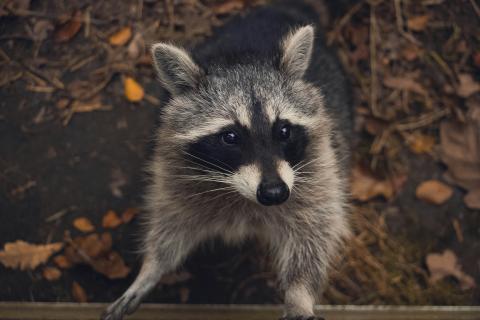
Raccoons are found all over Ontario, in forests and towns and cities. They can adapt to live in a wide range of habitats.
Movements and home ranges of raccoons vary greatly. In rural areas, home ranges between one and four square kilometres are common. At the other extreme, the area used by urban raccoons may be just a bit larger than a professional soccer field.
In urban areas, raccoons can cause significant damage to roofs, garages, gardens and lawns. Raccoons may need to be evicted from buildings and attics. In their search for food, raccoons can spill garbage and break compost bins.
You can prevent conflicts with raccoons by:
- Limiting food sources:
- Never feed raccoons
- Pick fruit as soon as it ripens
- Regularly pick up fallen birdseed
- Keep barbecues clean and covered when not in use
- Secure garbage in durable plastic containers with locking lids
- Store garbage indoors until collection day
- Keep compost in containers that keep raccoons out while allowing for ventilation
- Making your property unwelcoming
- Block off potential access points to your attic, garage and other buildings
- Secure the perimeter of decks, sheds and crawl spaces
- Keep indoor pet food and any other food away from a pet door. Lock the pet door at night.
- Install a chimney cap
- Trim branches near buildings to prevent easy access
- Complete home repairs in the autumn, so mother and young won't be trapped inside.
- Use flashing lights, motion sensors and noisemakers to deter raccoons
If you find a raccoon living in your home, follow these tips for dealing with it:
- Install one-way gates to allow animals to leave while preventing re-entry.
- Do not permanently block the entrance until you are sure no animals remain.
- Never separate a mother raccoon from her young. Evict raccoons in autumn when young have left the den.
- Local animal control agencies can be hired to safely and humanely remove problem wildlife from your home.
- The easiest solution to removing raccoons from a chimney is to wait for them to move on their own. After eight to ten weeks, the female and young will leave and not return.
- If raccoons need to be evicted, do not smoke them out and do not pour anything, including naphtha flakes or mothballs, down the chimney. Adult raccoons can easily climb out of a chimney, but their young can't.
Coyotes
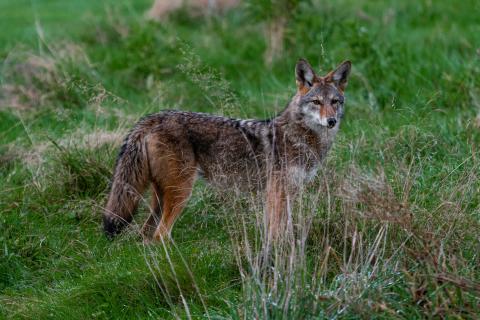
Coyotes are native to North America and can be found living in urban and rural areas. Changes in land use, agricultural practices, weather, and natural food shortages may contribute to increased coyote sightings in rural and urban settings.
Coyotes are difficult animals to live trap and licensed trappers must use leg hold traps and snares which in urban areas could pose a threat to pets and humans. Coyotes have adjusted well to living in close proximity to humans and following the above noted precautions can help residents co-exist with these animals as the Town of Newmarket's approach to living with coyotes is to leave them alone.
To prevent encounters and ensure that you, your family and pets remain safe, please consider the following tips:
- Remove any food attractants, including birdseed and ripe/rotten fruit that has fallen to the ground in your yard. These foods attract smaller animals that also attract coyotes.
- Store all garbage in tightly sealed containers; ensure compost and pet food are in a place that coyotes cannot access. This will deter coyotes as well as other animals and rodents from becoming a problem.
- Use motion sensitive lights in yards or gardens to make your property less attractive to coyotes and other nocturnal wildlife.
- Ensure spaces around/ under decks or sheds are closed off.
- Clean up after your dog — coyotes are attracted to dog feces.
- Neuter pets — coyotes are attracted to and can mate with domestic dogs that have yet to be neutered.
- Keep cats indoors and chickens, rabbits and other small animals in an enclosure that is covered and constructed with heavy mesh wire.
- Do not feed coyotes or leave any type of food outdoors for any animal, even your pets (i.e. dog/cat food).
Even following the above tips, you may still encounter coyotes. These tips will help keep your children and pets safe:
- Remember to never leave children unattended
- Educate your children to not approach or harass any wild animals or unfamiliar domestic pets and to admire wildlife from afar
- Never let your pet run at large, keep your pet on a leash when walking and confined to a fenced yard on your property. This is especially important during denning season (April to June) and the dispersal period (September to October) when coyote pups are leaving the den.
Dealing with an encounter
Generally, coyotes do not pose a threat to human safety, as they are shy and would prefer to avoid confrontations with people. However, if you are approached, stay calm and wait until they move on. If threatened, use whistles and personal alarm devices as a deterrent. Back away slowly while remaining calm, never run or turn your back on a coyote.
To learn more about coyotes, including how to deal with coyote problems, call the Ministry of Natural Resources office at 905-713-7400. If the coyote poses an immediate threat or danger to public safety, please call 911 to alert York Regional Police.
Coyote resources
Report a coyote sighting
Report a coyote sighting using our online form. This is a community-driven resource to help identify and create awareness around where coyotes are seen.
Use the map below to see reported coyote sightings displayed over the past three months. Click on a paw print and then the arrow to see details on an individual sighting. Click on Town Property (green areas) to see statistics on sightings in that area.
You may also call the Town at 905-895-5193 to report a sighting. Please be able to provide as much information as possible, such as the date, time and location of the coyote sighting, number of coyotes spotted, if a pet was involved, behaviour and any other relevant information.
Please remember to never let your pets run at large and to always keep them on a leash when out for a walk.