
There are bike lanes throughout Newmarket, each with different signs and symbols to tell you who can use them and how to use them safely. Learn more about the types of bike lanes and the signs and symbols they use below.
On this page
Types of bike lanes
There are different types of bike lanes in Newmarket. Some require cyclists to share the road with vehicles, while others require sharing with pedestrians. Learn about the different types and how to use them below.
Advisory bike lanes
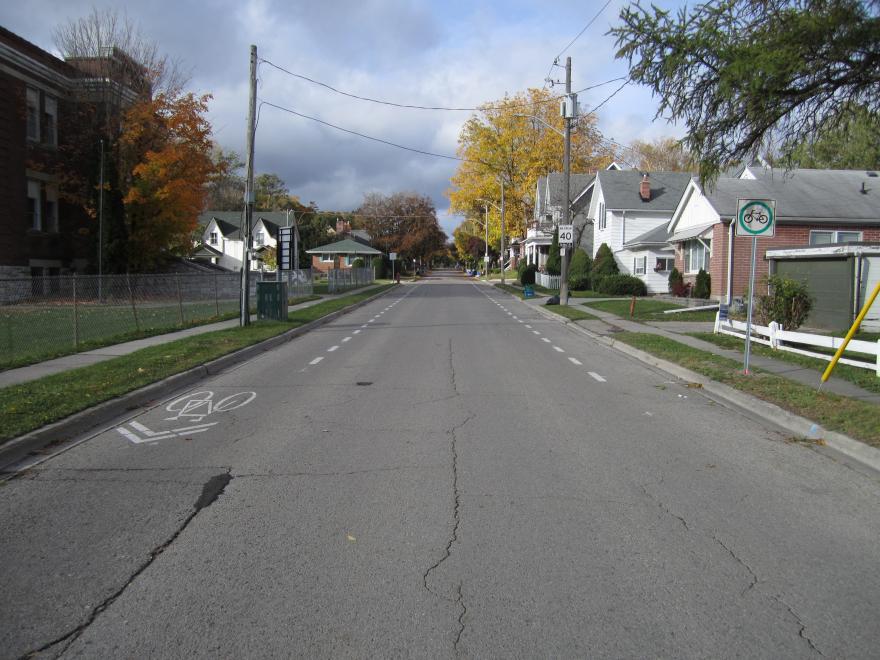
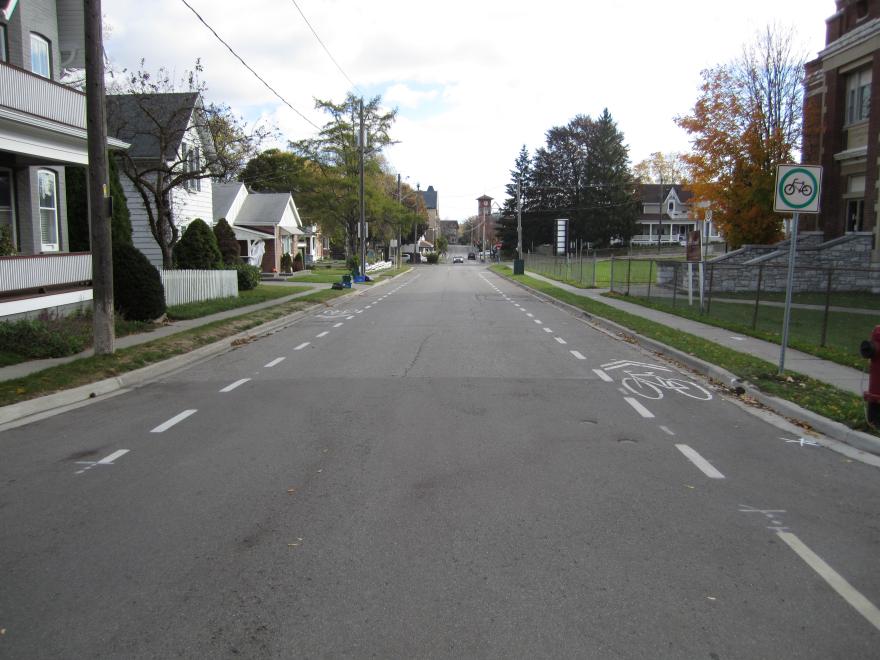
Advisory bike lanes are used on low traffic and narrow streets which cannot accommodate conventional bike lanes. This design has one centre motorist lane and two bike lanes, one on each side of the street. If two vehicles are approaching each other, they can enter the advisory bike lane to safely pass each other.
If you see a cyclist in an advisory bike lane, know that whoever is in front has the right of way. The vehicle in the travelling lane with a cyclist must enter the bike lane and follow behind the cyclist to allow the approaching traffic to pass. Once the approaching traffic clears, you can re-enter the centre lane and pass the cyclists, if needed.
Designated bike lanes
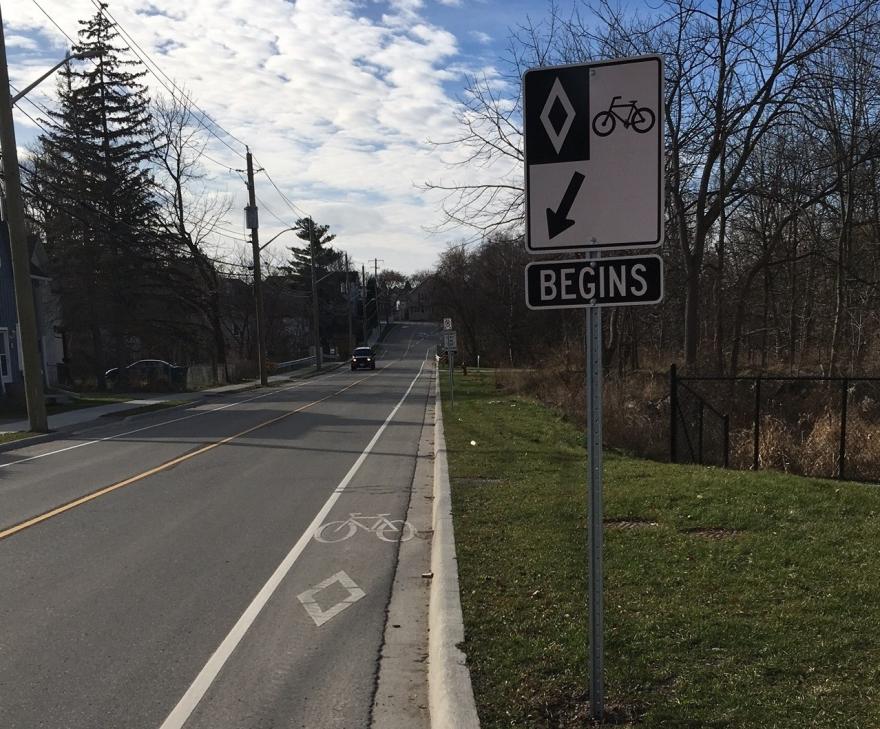
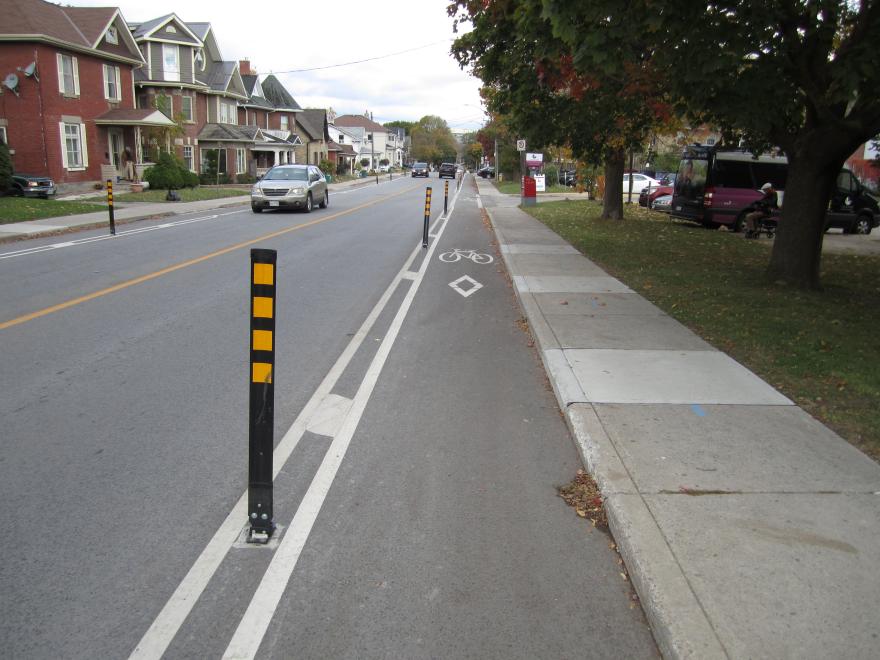
Designated bike lanes are installed on both sides of the street. They are intended for cyclists to travel with the flow of traffic. These lanes are dedicated to cyclists and separated from motorist lanes by pavement markings. In some cases, physical barriers are installed between bicycle and motorist lanes. Newmarket has installed flower planters and flexible bollards in some locations for additional protection to cyclists. Flexible bollards and planters are removed in winter months and installed in spring months to allow for snow plowing and street sweeping.
Green route markers (sharrows)
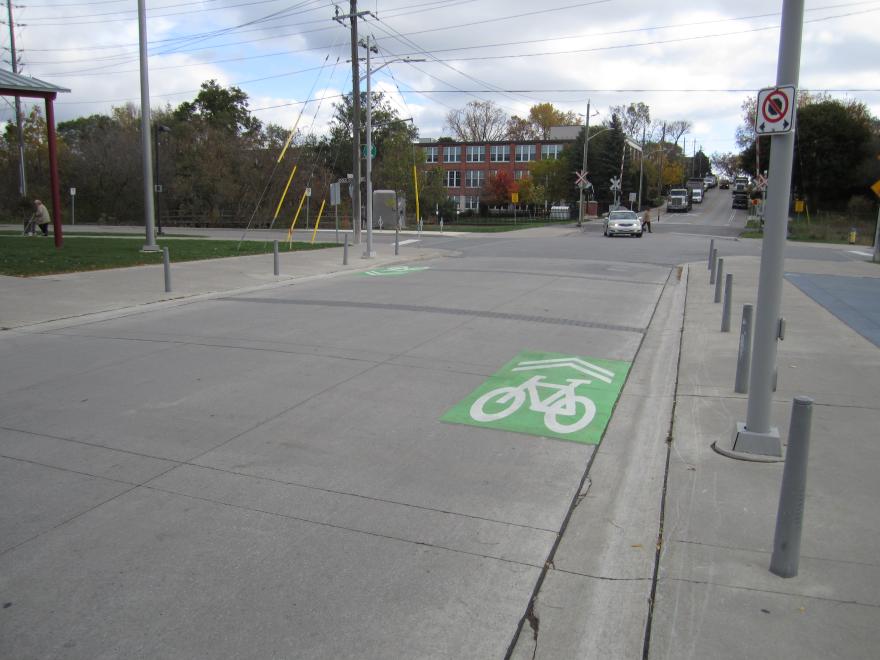
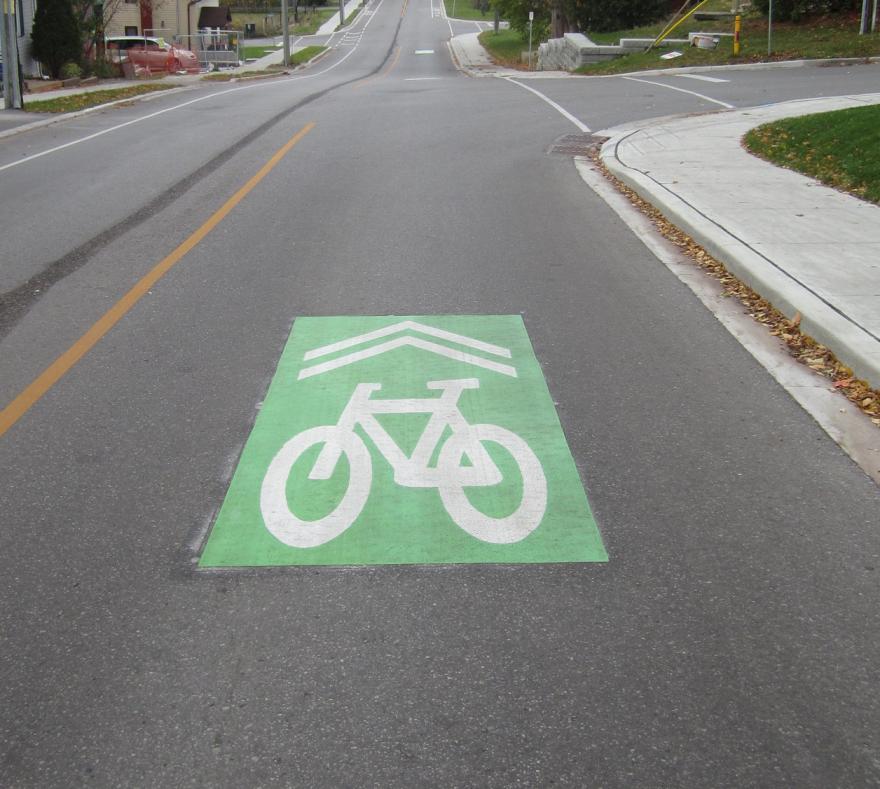
Sharrows are used on a street to indicate a bike route and to remind users that the road is shared between motorists and cyclists. If the road is wide enough for cyclists to ride alongside motorists, sharrows are placed near the curb (bottom left photo) accompanied with 'Share the Road' signs. If the road is too narrow, the sharrows are placed in the centre of the lane (bottom right photo) accompanied with 'Single File' signs.
Multi-use paths
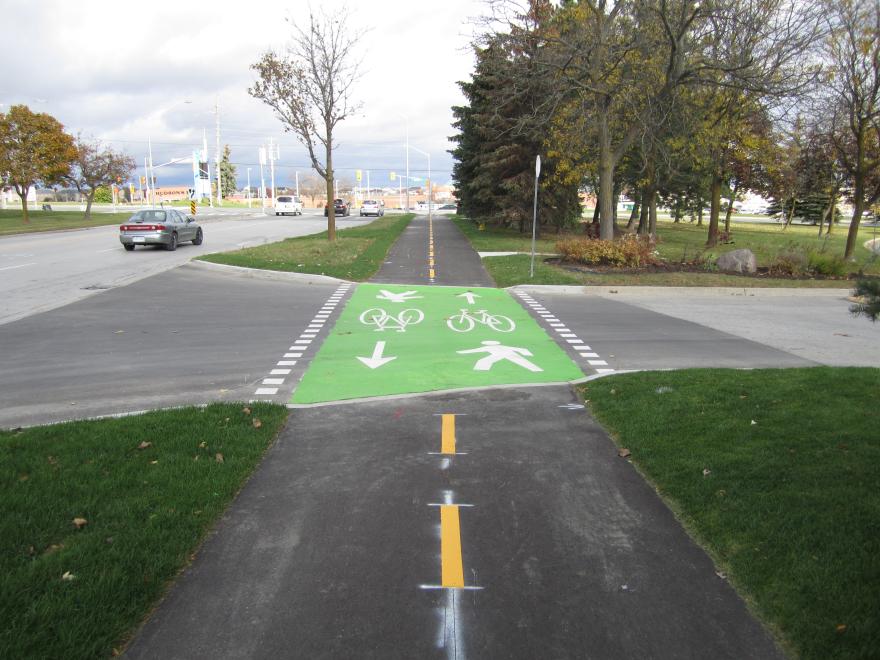
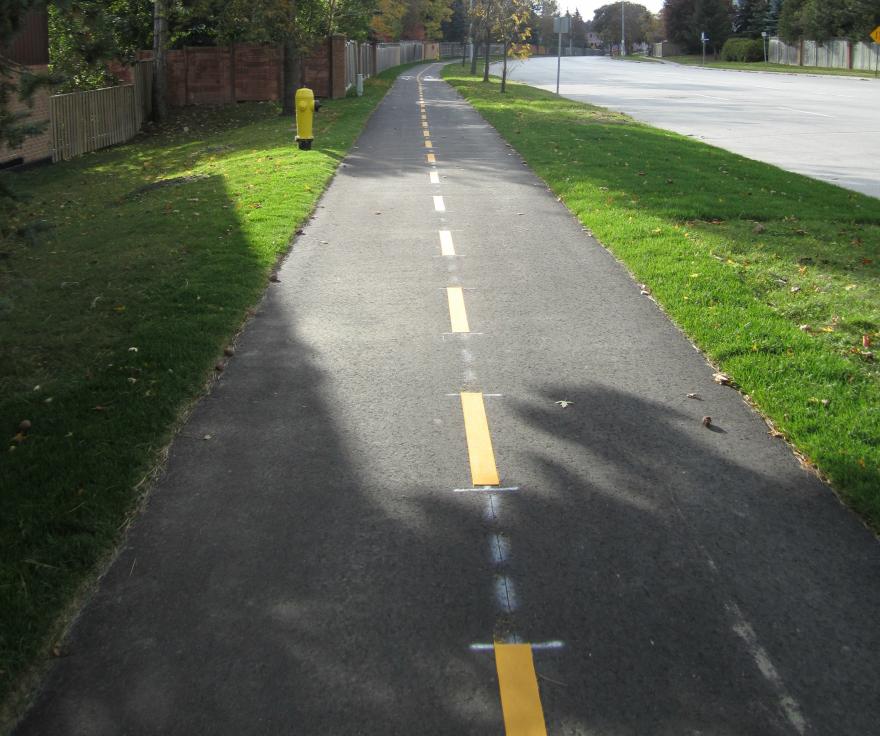
Multi-use paths allow pedestrians and cyclists to safely use a path together. These paths are intended to be treated like a 'miniature roadway'. Slower travelling users should stay on the right side of the path. This allows faster users to pass on the left side when the time is appropriate and safe.
Bike lane signs
Bike lane signs help ensure both cyclists and drivers know how they should behave in specific situations. Knowing what each sign means and following it will help keep you and other travellers safe on the road.
Learn about the various types of Bike Signs that you may encounter in Newmarket by watching this educational video brought to you by Safety Cone Sam and Belle the Bike:
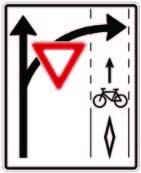
Turning vehicles yield to bicycles
This sign is used to indicate to motorists that they must yield to cyclists before turning right at an intersection. Find this sign on Srigley Street and Carlson Drive.
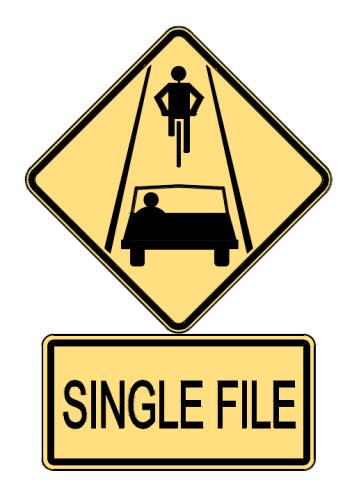
Single file
This sign is intended to indicate that motorists and cyclists share the road, and ride in a single file fashion. Vehicles are not permitted to pass cyclists; unless there is a dashed line and it is safe to do so. Find this sign on Main Street South between Timothy Street and Park Ave.
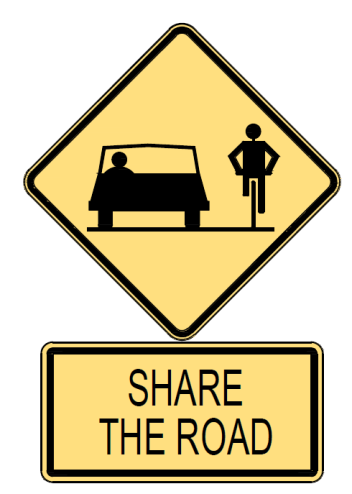
Share the road
This sign is intended to indicate that motorists and cyclists share the road and that cyclists should ride near the curb. Find this sign on Timothy Street between Doug Duncan Drive and Main Street South.
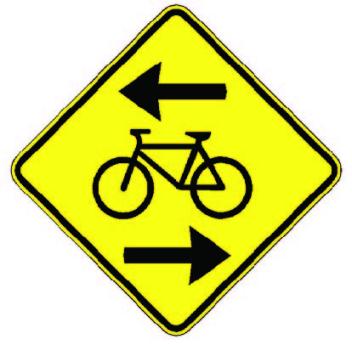
Contraflow bicycle lane crossing
This sign is used as an approach to an intersection with one-way motor traffic and two-way cyclist movement. Find this sign on Eagle Street West and Upper Canada Road.
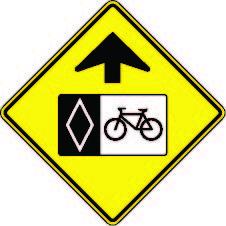
Reserved bicycle lane ahead
This sign is placed on a road without bike lanes, warning road users that bike lanes are ahead, and that motorists may need to re-align their position on the road. Find this sign on Stackhouse Road and Leslie Street (North-East corner).
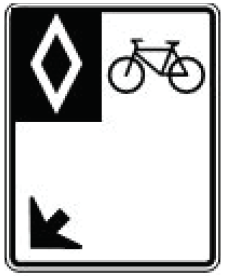
Reserved bike lane
This sign indicates a portion of the designated roadway for the exclusive use of cyclists. Find this sign on Millard Avenue between Lorne Avenue and Yonge Street.
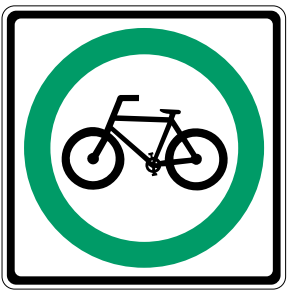
Bicycle route
This sign indicates a bicycle route. Find this sign on Park Avenue between Main Street South and Lorne Avenue.
Bike lane symbols
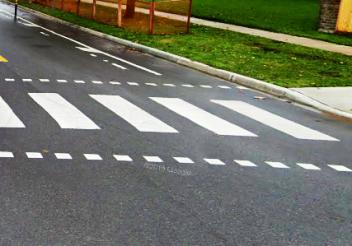
Crossrides (elephant's feet)
At crosswalks, cyclists are legally required to dismount and walk their bicycles across. Elephant's feet (painted squares) allow cyclists to ride their bicycles along the crosswalk legally. Crossrides can be combined with pedestrian crossings by adding elephant's feet along both edges of the crosswalk. Crossrides can also be separate, a crosswalk for pedestrians, and a crossride for cyclists. To date, Newmarket has only installed combined crossrides. Elephant's feet may also be seen at entrances to commercial properties. Find crossrides on Eagle Street West and Millard Avenue West.
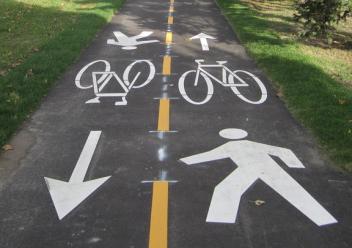
Mixed crossride
This symbol is used to indicate a multi-use path for pedestrians and cyclists and the direction of travel for all users.
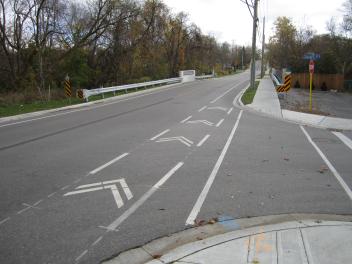
Chevrons (double arrows)
Chevrons are typically used at intersections where a bicycle lane and a street intersect. They indicate to cyclists that an intersection is approaching and to be aware of vehicles entering the bike lane. Likewise, it alerts motorists that cyclists are anticipated and to proceed with caution. Find chevrons on Srigley Street between Prospect Street and Leslie Street.
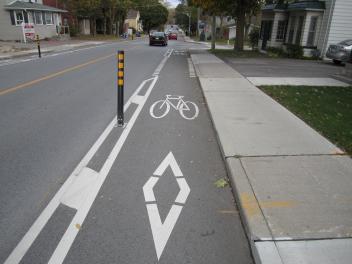
Bicycle with a diamond
This symbol indicates a reserved bike lane; a designated portion of roadway dedicated to cyclists. Find diamond lanes on Prospect Street between Timothy Street and Srigley Street.
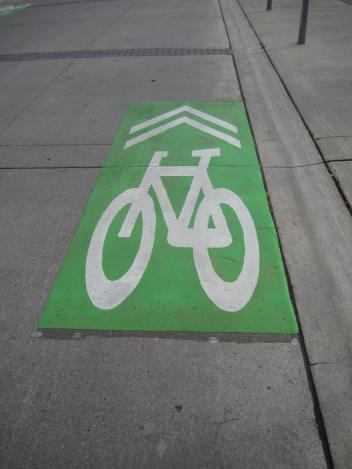
Sharrow
Sharrow symbols are used to indicate a bicycle route and the preferred travel path for cyclists.