
On this page
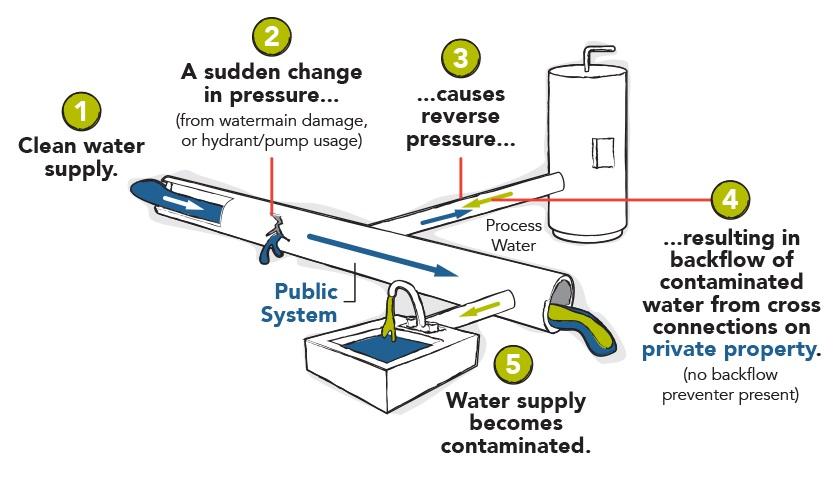
Water backflow happens when water from private properties flows back into the public system. These properties may have internal connections (cross connections) to water used for non-potable purposes. This can create unsafe situations because of the potential for contaminants to flow back into the drinking water system.
There are two causes of backflow:
- Back Pressure: when the pressure of a building's plumbing system is greater than the pressure of the drinking water system. This can force water in a building into the drinking water system. Back pressure situations are typical in high rise buildings and industrial buildings.
- Back Siphonage: when the pressure in the drinking water system decreases and sucks in water from a building. Low pressure can be caused by a watermain break, hydrant flushing or firefighting.
The opportunity for backflow exists whenever there is a difference in pressure between two water systems. However, major contaminants entering the drinking water system due to backflow is less frequent.
Backflow Prevention Program
To help protect the Town of Newmarket's drinking water system, we have a Backflow Prevention Program. This program protects human health and drinking water quality. It also helps manage risk, maintain system security and achieve regulatory compliance.
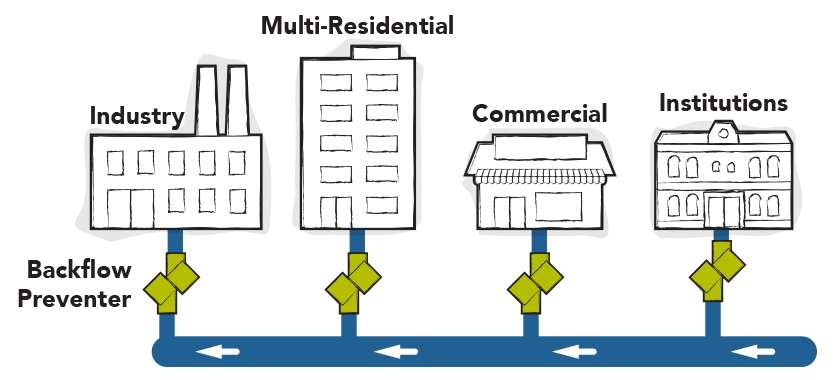
Under the Backflow Prevention Program, industrial, commercial and multi-residential property owners must:
- Conduct a cross connection survey of the water systems to assess risk of contamination every five years
- Install backflow prevention devices at each property, if determined necessary by the survey
- Submit backflow prevention device tests to BSI Online annually, if installed
- Take corrective actions identified in the survey and annual tests
- Ensure work is done by qualified personnel
Property owners or agents of property owners are responsible for meeting the program requirements. Compliance is monitored by the Town’s Water Services. Enforcement ranges from reminders to fines and penalties. If necessary, enforcement may include disconnection of the water supply to the subject property.
Residential property owners, including townhouse owners, do not have to participate in this program. These properties have limited cross connections and lower risks. If a property is a high contamination risk, they may be subject to this program.
Backflow testing with BSI Online
Survey and form submissions
Please be advised that as of February 1, 2025, paper copies of test results will not longer be accepted.
Please email all Cross-Connection Control Surveys to backflowsurveys@newmarket.ca.
If you have any questions, please email info@newmarket.ca.
The Town has collaborated with BSI Online to enhance the management of the Cross Connection/Backflow Prevention program. Property owners with installed devices are required to have their backflow prevention devices tested annually by a qualified individual and to submit the test results online via BSI Online.
You will receive a notification from BSI Online regarding the due date for your backflow testing. It is necessary to provide a copy of this notification and/or your Customer Confirmation Number (CCN) to your tester. Your tester will be obligated to submit the results to the backflow tests online through the BSI Online web portal.
For further information regarding device test results, you may contact BSI Online's Customer Service at:
- Email: backflow@bsionline.ca
- Phone: 604-492-0163
- BSI Online Product Support
Frequently asked questions
Backflow Prevention By-law
The Town is legally responsible under the Safe Drinking Water Act, Section 19, Standard of Care to do its due diligence. Installation of backflow preventers is required under Section 7 of the Ontario Building Code and the Ministry of Environment, Conservation and Parks expects the Town to implement a backflow prevention program. This is considered to be a necessary industry best practice.
The purpose of the by-law is to ensure that the Town continues to provide safe and high-quality drinking water to our community by decreasing the chance of backflow, flowing into the public system.