
Yard Waste
On this page
Yard waste is collected every other week from April to early December on your scheduled collection day. To determine your collection day, please check our Recycle Coach app or refer to the Waste and Recycling Calendar.
Remember to place yard waste containers at the curb no later than 7 a.m. on your scheduled collection day and no earlier than 5 p.m. the night before collection. Please remove emptied containers and any uncollected waste from the curb by 8 p.m. on collection day.
Be a good neighbour. Don't sweep leaves onto the road. Newmarket residents are reminded to not dump any waste, including leaves, onto the road (in accordance with the Town's By-Law 1990-79). Doing so can cause potential flooding on storm drains.
Collection guidelines
Place yard waste containers and bundles at the curb by 7 a.m. for collection on your scheduled collection day.
Do not place yard waste containers or bundles on the road or sidewalk as they may be a hazard to traffic and other residents. Keep yard waste containers and bundles separate from your neighbours. Proper placement will help avoid damage to containers and will reduce interference with Town operations.
Do not overfill your yard waste containers. Each yard waste container or bundle must not exceed 22 kg (50 lbs).
Acceptable materials
- Leaves, shrubbery, brush and tree trimmings, flowers, weeds, plants (soil removed), pumpkins, corn stalks, hay, and straw.
- Branches, twigs and cuttings that are tied in secure bundles using jute or cotton twine (no metal or plastic) and are less than 1.2 m (4 ft.) in length and 0.6 m (2 ft.) in diameter and individual branches that are less than 10 cm (4 in.) in diameter.
Unacceptable materials
- Grass, grass clippings (we recommend grasscycling), thatch, rocks, stumps, dirt, soil, sod, root balls, kitchen scraps and food waste, flower pots/trays, animal droppings, driveway and road sweepings, painted/treated wood, garbage.
- Branches, twigs and cuttings that are not tied and are not in secure bundles.
- Branches, twigs and cuttings that are greater than 1.2 m (4 ft) in length or 0.6 m (2 ft) in diameter and individual branches that are greater than 10 cm (4 in) in diameter.
Containers
Acceptable containers for yard waste include:
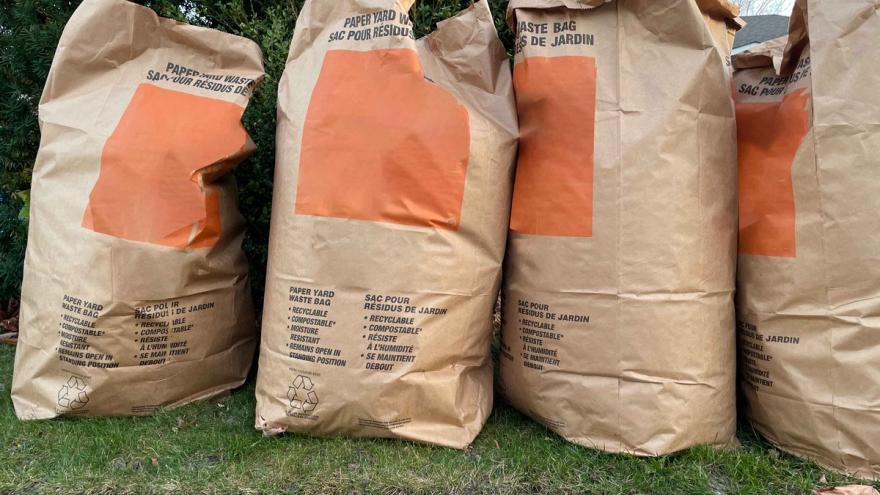
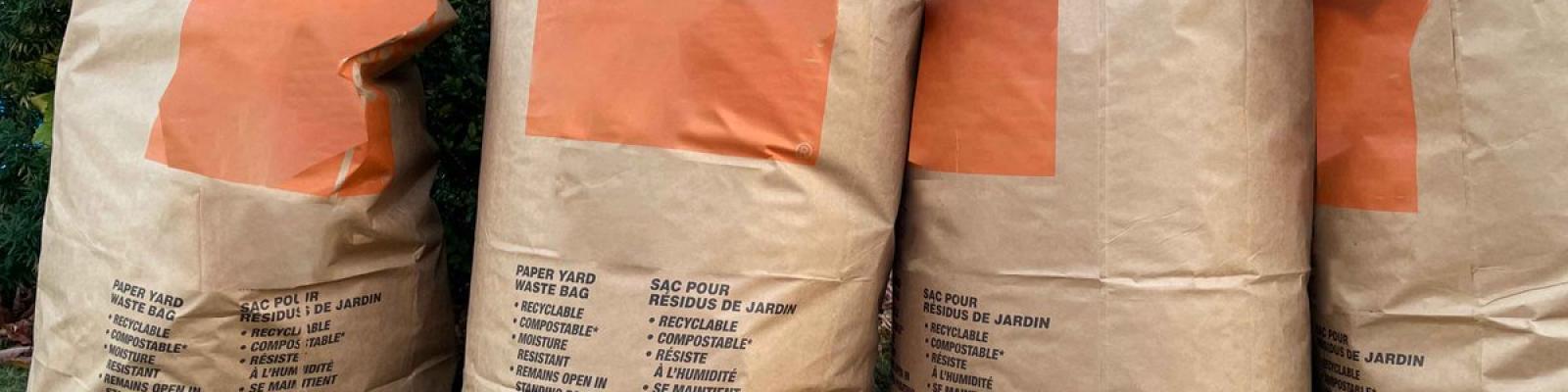
- Kraft paper bags designed for leaf and yard waste material.
- Reusable, rigid, open-top containers such as a garbage can that does not exceed 125 L in capacity, 50 cm (20 in) in diameter, or 90 cm (36 in) in height.
Containers must be clearly labelled with a yellow "Yard Waste" sticker. To request a free sticker, please contact Customer Service at 905-895-5193 or info@newmarket.ca.
The following containers are not accepted:
- Cardboard boxes
- Garbage bags (of any colour)
- Green bins
- Oversized rigid containers
- Recycling blue boxes
- Containers resembling blue boxes
Missed collections
For missed collections or waste collection inquiries, learn about reasons your collection may have been missed or call GFL at 1-866-421-5625. If you received an 'oops' sticker with your waste and recycling collection, please view GFL's page for more information.
Yard waste drop-offs
Yard waste material can also be dropped off at select York Region waste depots for disposal (disposal fees apply). Visit York Region's website for more information, including a list of accepted drop-off material.
Grasscycling
Grass clippings are not an accepted yard waste material and are not included in Newmarket’s curbside collection program. Once grass has been cut, it starts to decompose. Due to processing challenges at York Region composting facilities and the amount of odour produced when decomposing, grass clippings are not collected.
Instead, we encourage residents to practice grasscycling. Grasscycling is the act of leaving grass clippings on your lawn after mowing. Grass clippings are comprised of 80-90% water and decompose quickly, returning valuable nutrients back to the soil. Grasscycling is regarded as a best practice for many large Ontario municipalities such as the City of Toronto, Durham Region, and Niagara Region, who have banned grass clippings from their curbside collection programs.
Benefits of grasscycling
- Saves time and effort. No need to collect, bag, and dispose of grass clippings.
- Reduces water use. Because grass clippings are mostly water, they slow water evaporation from the soil as they break down, keeping moisture in the ground.
- Reduces the need for fertilizer by 30 per cent. As grass clippings decompose, they return valuable nutrients like nitrogen, potassium, and phosphorus back into the soil to help build healthy roots.
- Reduces collection and processing costs at Yard Waste depots, which supports the York Region Leaf and Yard Waste and Composting Strategy in the SM4RT Living Plan (Waste Management Master Plan).
Image
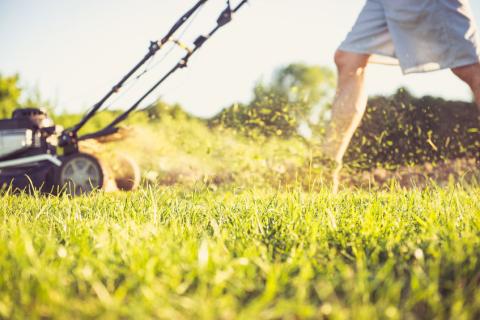
Tips for successful grasscycling:
- Lawn mower blades must be sharp. Dull blades tend to tear grass, making the lawn more susceptible to disease and discolouration.
- The ideal height for grass is 6–7 cm (2.5–3 in). When mowing your lawn, remove no more than one third of the grass blade.
- Try to mow only when grass is dry. Do not cut grass during a drought or when grass is wet.
Can grasscycling cause thatch build-up?
No. Thatch build-up is an intermingled layer of stems, crowns, and roots that accumulates between the soil and grass blades. The organic debris that makes up thatch tends to decompose slowly, whereas grass clippings, being mostly composed of water, decompose quickly. Factors such as poor aeration and drainage can contribute to thatch build-up.
Does grasscycling cause lawn disease?
No. Improper watering and use of fertilizer are the primary causes of lawn disease.
Will grasscycling make my lawn look less attractive?
No. Grasscycling is a good practice in producing a healthier-looking lawn by returning nutrients back into the soil. However, if a lawn is not mowed often enough, and long grass clippings are left on the lawn, this can result in a "hay-like" appearance which can be unsightly. Remember, when mowing your lawn, remove no more than one third of the grass blade.
Are there alternatives to grasscycling?
Yes. Grasscycling is not always possible due to various situations such as prolonged wet weather, infrequent mowing, and excessive lawn growth. In these types of situations, it is recommended that thin layers of grass clippings be added to your backyard composter. Allow grass clippings to dry in the sun before adding to your composter.
Residents can take small amounts of grass clippings to the Richmond Hill Compost Facility, located at 1351 Bloomington Road in Richmond Hill, Ontario.