
Lymantria dispar dispar (LDD) also known as the Spongy Moth, is an invasive insect that has been found in the Town of Newmarket.
Caterpillars will eat the leaves of a variety of trees but oak species are generally targeted. Most healthy trees can withstand one to several years of defoliation by LDD as healthy trees are able to regrow their leaves during the same growing season within two to three weeks. The LDD moth population generally surges every 7 to 10 years and the increase usually lasts for 1 to 3 years.
On this page
Protecting trees on your property
The Town of Newmarket does not treat/manage trees on private property, however there are some steps residents can take to protect their trees from LDDs if there is a surge in LDD. Due to the favourable climate for the LDD moth, the developmental stages for LDD moths have been accelerated by a month. As the LDD moth is currently in the pupae/cocoon stage, residents can remove their burlap traps and any kind of trap from their trees and keep them for use next season.
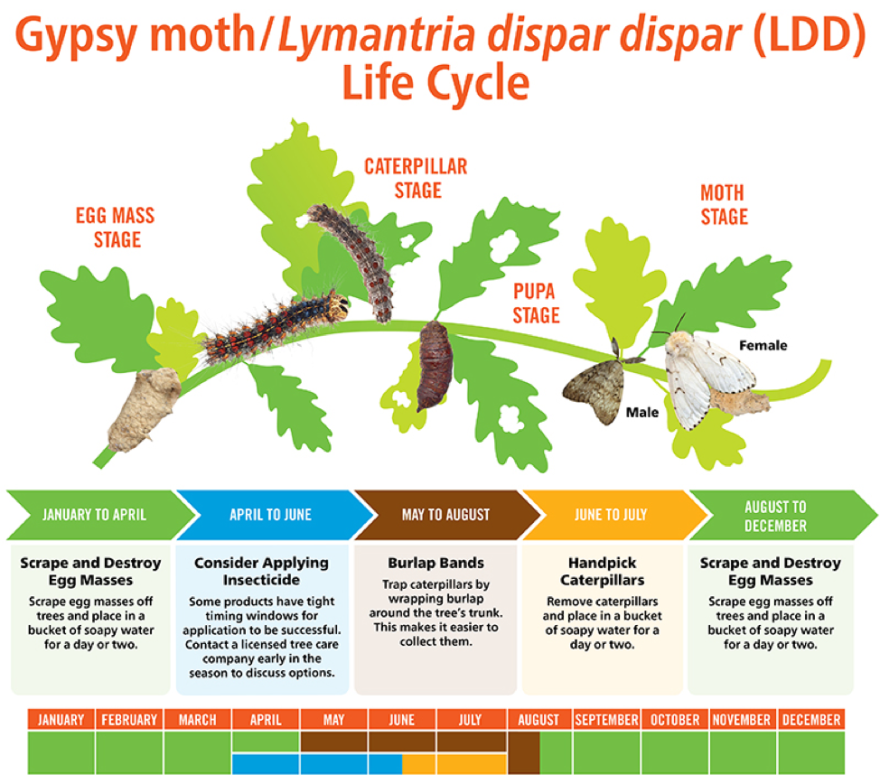
Mid July (current year) to April (following year)
Scrape and destroy egg masses. You can do this by scraping egg masses off trees and placing them in a bucket of soap water for a day or two. Please wear gloves while doing this work as the caterpillars can irritate your skin.
How to identify LDD Egg Masses
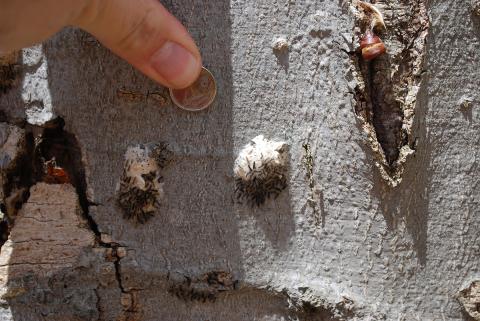
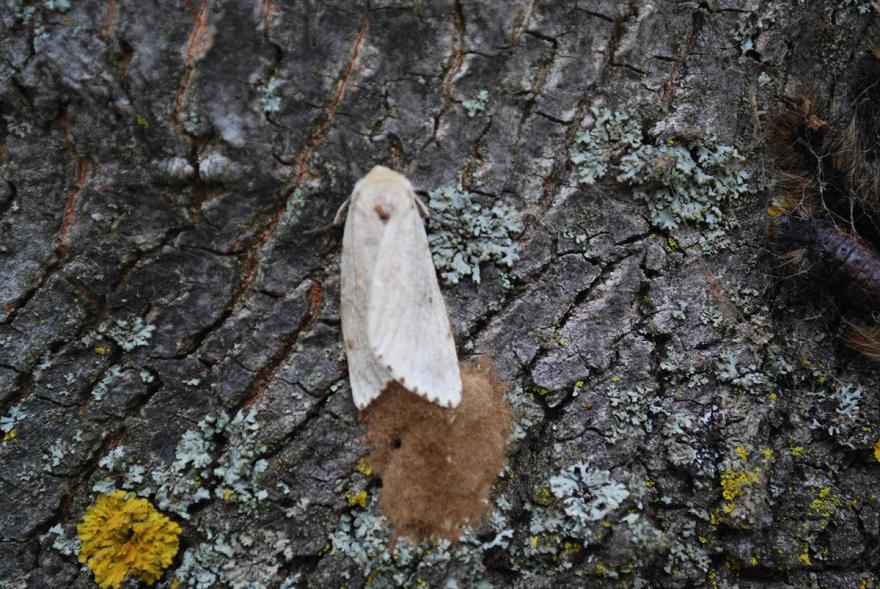
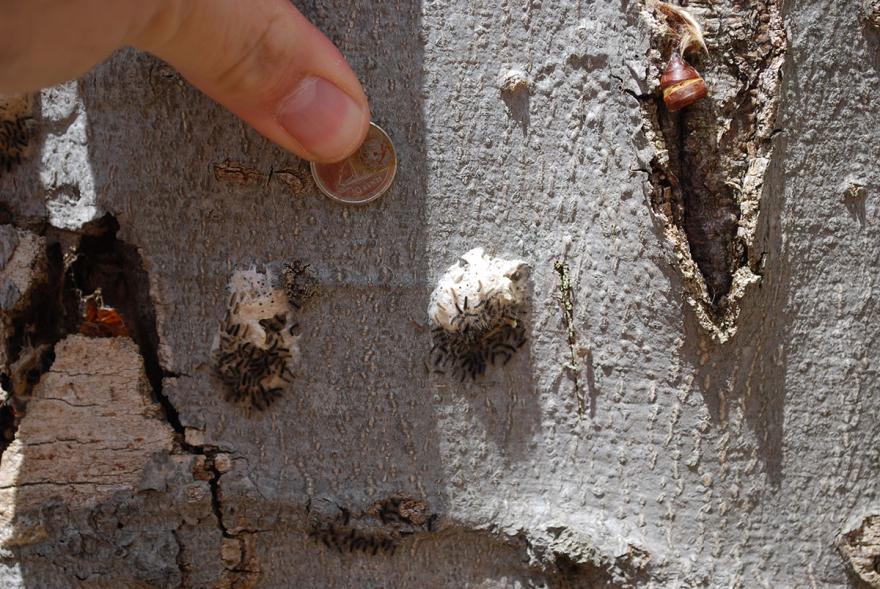
Egg masses are a small cluster of eggs that range in the size of a dime to a little bit bigger than a quarter. Egg masses can contain anywhere from 100 to 1,000 eggs. They are tan or light brown in colour and has a soft fuzzy look to it. These egg masses are typically found on the trunk of the tree anywhere from ground level up to about 60 cm above the ground is typical however they can be anywhere along the trunk. They are also commonly found on the undersides of branches, and in crevasses on the tree. Although less commonly found, the moths will also ley the eggs on the leaves, and on other nearby objects such as firewood, outdoor furniture, fences, and even the sides of sheds and houses.
Tools you need to remove LDD Egg Masses
- A tool for scraping such as a putty knife, butter knife, pot scraper or spoon
- Gloves and protective eye wear as LDD egg masses can cause skin irritation
- A container to hold the egg masses
- Dish soap and water
How to remove LDD Egg Masses
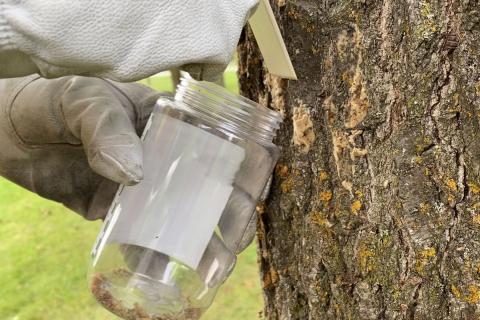
- Using your tool, scrape the egg masses into a container. When scraping the tree make sure not to damage the bark of the tree. Make sure to catch all of the eggs because ones that fall on the ground and aren't collected can still hatch next year.
- To destroy the eggs, fill the container that you have collected the egg masses in with water and a bit of dish soap and let them sit in it for at least 48 hours then dispose of them.
Video: Learn how to scrape LDD egg masses from trees
April to June
Consider applying insecticide such as BTK or Tree Azin – both insecticides are not harmful to people or the environment. Many products have a tight window in order for the application to be successful. We recommend you contact a licensed tree care company to learn about your options to manage LDD.
May to early July
Use burlap bands to trap LDD caterpillars. Wrap a 45cm piece of the burlap entirely around the tree's trunk at chest height to catch the caterpillars. Tie a piece of string half-way up the burlap and fold the top section down over the string to create a skirt. This trap should be checked daily and any captured caterpillars should be removed and placed in a container of soapy water for a day or two before being disposed of. Please wear gloves while doing this work as the caterpillars can irritate your skin.
Video: How to install burlap bands on trees
June to July
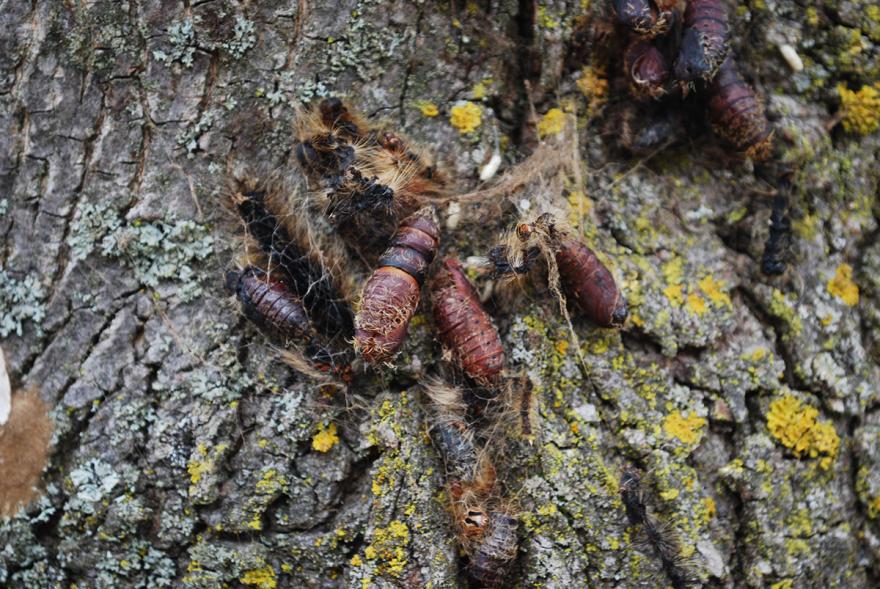
During this time, you can handpick the caterpillars/pupae/cocoon and place them in a bucket of soapy water for a day or two. Please wear gloves while doing this work as the caterpillars/pupae/cocoon can irritate your skin.
What is the Town doing to treat LDDs?
The Town has set up burlap bands on trees in various areas in Town in order to collect data and track the population. If you see these burlap bands around Town, please do not remove them. Residents are encouraged to set up burlap bands as soon as possible to help slow down spongy moth caterpillars from travelling up the trees and feeding on the leaves.
Later in the season, the Town will be currently identifying 'hot-spots' and priority Town-owned areas that have egg masses while working with York Region on best practices on controlling the LDD population.
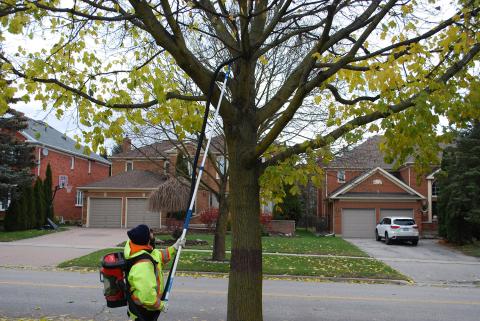
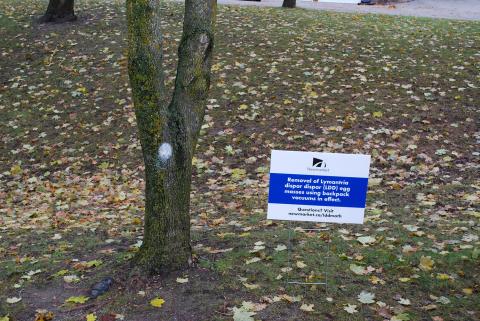
The Town will not be spraying LDD with pesticides at this time due to the reduction in effectiveness of the spray during this stage of the lifecycle for the LDD caterpillar. In addition, more data collection about the LDD population is required before the decision to spray can occur. Spraying not only kills the LDD caterpillars but all caterpillars that may be a food source for other wildlife. During the caterpillar phase, burlap traps are the most effective way for residents to treat LDD on their private property. As the LDD moth is currently in the pupae/cocoon stage, residents can remove burlap traps from their trees and keep them for use next season.
We will continue to work with York Region and local municipalities on best practices in managing LDD in our community. Please note that the Town does not treat LDD on private property. Residents are encouraged to contact an ISA Arborist if they are considering applying insecticide to their trees.
While LDD caterpillars may have been unpleasant, and cause trees to lose their leaves, the majority of trees will be able to withstand many years of defoliation by LDD and be able to regrow their leaves without significantly damaging the tree's heath. Currently, the Town's tree canopy has begun to show signs of regrowth and are recovering from LDD caterpillar feedings.
Report LDD sightings in your neighbourhood
We are currently collecting LDD egg mass information. LDD egg masses are fuzzy, a tan colour and range in size from a dime to a larger toonie. The egg masses are laid individually or in a large clump. If you see egg masses in your neighbourhood, report it to the Town of Newmarket using this online form. Data collected will help the Town identify hot-spot areas, identify how vast the LDD population is in the community and help to develop strategies for next year to mitigate the negative effects of LDD.
This fall the Town will be focusing on removing egg masses from areas known to have trees which are vulnerable to LDD feedings. See the map below for LDD egg mass hotspots in Newmarket.
Frequently asked questions
Use of the name Lymantria dispar dispar (LDD)
Lymantria dispar dispar is more commonly known as gypsy moth. However, use of the name gypsy moth could be perceived as culturally insensitive. As part of Newmarket's commitment to Diversity, Equity and Inclusion by promoting equity, accessibility, and inclusion through our thoughts and actions in support of our growing community, the Town will be replacing the name gypsy moth and introducing the Latin name Lymantria dispar dispar (LDD) in our communications.
New common name - Spongy Moths
The Entomological Society of Canada (ESC) has adopted the new common name of ‘spongy moth’ for Lymantria dispar dispar or LDD moth. Newmarket is joining the ESC and many other government agencies in adopting this new name. Over time, references to LDD moth in Town materials will be updated to spongy moth.