
Mulock Park has a storied past shaped by centuries of Indigenous presence, settler agriculture and six generations of one of Canada’s most influential families.
On this page
The first peoples of this land
Long before European settlement, the area was part of the traditional territory of the Anishinaabe nation, including our closest neighbour today, the Chippewas of Georgina Island First Nation. The area is also on the traditional territory of the Wendat and Haudenosaunee Nations. Present-day Newmarket lies along the Toronto Carrying Place Trail, an important Indigenous trading route. Much of the land was later acquired by settlers without formal surrender, leading to the Williams Treaties of 1923.
Early settlers: The Rogers family
In 1801, Quaker leader Timothy Rogers guided families from the northeastern United States to Upper Canada, securing 8,000 acres of land grants. In 1804, Rufus Rogers acquired the 210-acre Crown lot that includes today’s Mulock Park.
For decades, the Rogers family farmed this land near the pioneer village of Armitage. In the 1870s, Augustus Rogers built the farmhouse that remains part of Mulock House today.
Sir William Mulock
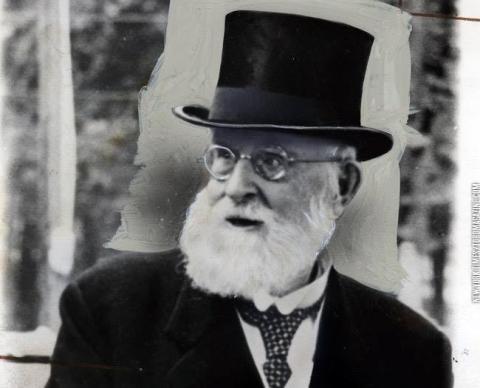
Born in Bond Head, Sir William Mulock's family moved to Newmarket where he spent his childhood, before moving to Toronto for post-secondary education.
Sir William Mulock held many prestigious positions as a lawyer, businessman, educator, farmer, politician, judge, and philanthropist. In academia, Mulock taught Modern Languages at the University of Toronto and later served as the Chancellor, a role he held until he died in 1944, at the age of 100. From 1882 to 1905, Mulock was elected to the House of Commons as a Member of Parliament. As a Cabinet Minister, Mulock served as the Postmaster General (1896 to 1905) and later established the Department of Labor (1900).
Mulock Property
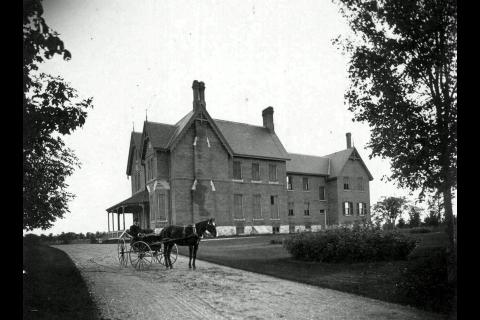
In the late 1800s, Sir William Mulock purchased the 200-acre property in Newmarket, intended to serve as his summer home. However, the property soon became a frequent place for important meetings, special occasions, and social gatherings for notable guests. Some famous guests include Frederick Banting and Charles Best, who discovered insulin and Prime Minister William Lyon Mackenzie King.
The storied home was built in 1870. Designated under the Ontario Heritage Act, the former home of the Mulock family has been thoughtfully restored and renovated into a spectacular 17,000 square foot community space including a gallery in partnership with the Art Gallery of Ontario, a café and verandah overlooking the great lawn and a full kitchen to support catered special occasions.
Purchased by the Town of Newmarket in 2018, thousands of community members came together to help shape the vision for this extraordinary place. Learn more about the design and construction of Mulock Park at HeyNewmarket.ca/MulockPark.
Peonies
Peonies were once a showpiece in the estate gardens and part of the warm hospitality for which the property became known.
During construction, peonies from the Mulock’s garden were nurtured in a temporary nursery and have been replanted in these historic gardens, reflecting the past and future of the property. At one point in the more recent Mulock history, the peony beds were said to have spanned over fifty feet west of the house, and were prominent among the many notable plants in the beautiful gardens.
Inspired by this history, Mulock Park’s logo features a peony with the four corners of the petals joining together in the centre to represent all corners of our community coming together in a central gathering space, honouring the rich history of this landmark property.